
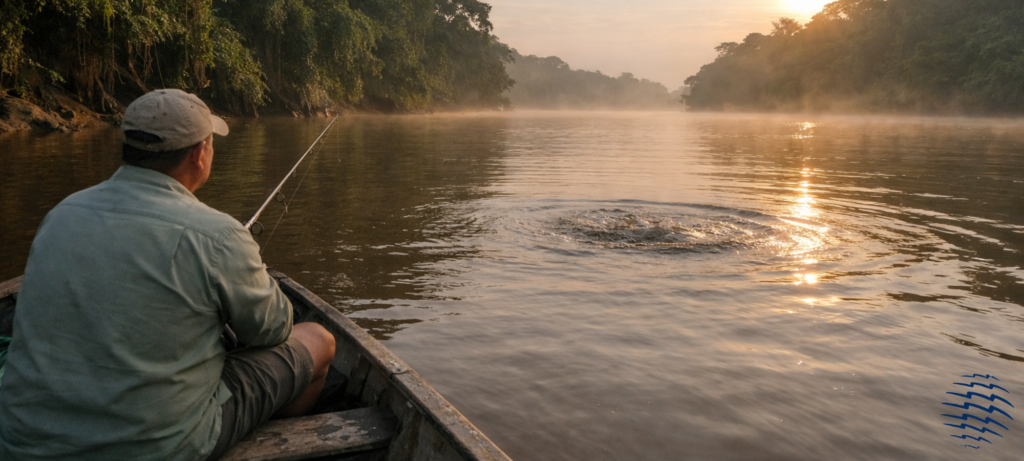
Let’s be honest for a second. If you’ve ever stood on the edge of the Essequibo as the sun starts to burn through the morning mist, you know that Guyana fishing isn’t just about a rod and a reel. It’s an assault on the senses. The air is thick enough to drink, the monkeys are screaming in the canopy, and something—something very large—just rolled in the tea-colored water ten feet from your boat.
In 2026, while the rest of the world’s fishing spots are becoming “Disneyfied” versions of their former selves, Guyana remains the last great frontier. It’s raw. It’s complicated. It’s exactly what an adventure should be.
1. The Setting: Why Guyana is an Outlier
There are plenty of places in the world where you can hook into a big fish. But in most of those places, you’re never more than a mile from a luxury resort or a paved road.
In Guyana, the setting is the story. The rivers don’t feel like they’ve been managed; they feel like they’re tolerating you. The jungle doesn’t just sit on the bank—it crowds the water, with vines hanging down like curtains. You aren’t just fishing; you’re stepping into a prehistoric timeline where the species look like they were designed by a fantasy illustrator.
2. The Heavy Hitters: Species You’ll Actually Meet
If you’re coming here, you’re likely after “The Big Three.” But there is so much more moving beneath the surface.
The Arapaima: The Legend
You cannot talk about the 592 without mentioning the Arapaima. It’s a literal dinosaur. Seeing a 200-pound fish surface to breathe yes, breathe is a sight that stays with you. In 2026, conservation is the name of the game. Most high-end lodges now operate on a strict catch-and-release basis to ensure these giants are around for another million years.
The Peacock Bass (Lukanani)
Locally known as the Lukanani, these are the “street fighters” of the river. They are bright, they are aggressive, and they will absolutely wreck your topwater lures. If you think a Bass has a mean strike, wait until you feel a 15-pound Peacock hit your lure with the force of a runaway truck.
The Payara: The Vampire Fish
With two-inch fangs in its lower jaw, the Payara looks like it belongs in a horror movie. They love fast, oxygenated water—think rapids and tailwaters. They are sleek, silver, and incredibly fast.
The Monster Catfish
Then there are the catfish. The Lau Lau (Piraiba) can grow to be hundreds of pounds. When you hook one of these in a deep river channel, it’s less of a “fight” and more of a “tug-of-war” with a submerged engine.
3. The Main Fishing Regions (The Map of the 592)
Guyana is basically a network of water. But three specific regions stand out for different reasons.
The Essequibo: The Main Artery
The Essequibo River is massive—so wide in places you can’t see the other side. It is dotted with thousands of islands. This is the place for variety. You can spend the morning jigging for Silver Drum and the afternoon casting for Peacocks.
The Rupununi and Rewa: The Deep Interior
This is where the real expeditions happen. The Rewa River is “blackwater” territory. It’s dark, nutrient-dense, and home to the highest concentration of Arapaima. It’s quiet. It’s remote. It’s beautiful.
Demerara and Region 4: The Coastal Connection
Don’t sleep on the waters near the capital. Around Georgetown and Guyana Region 4, the fishing is a way of life. It’s where you see the artisanal fishing boats heading out at dawn. If you’re spending time in the city before heading “into the bush,” exploring the local markets is a must to see the sheer diversity of what comes out of these waters.
4. The 2026 Fishing Calendar: Timing is Everything
In Guyana, the “seasons” aren’t about hot or cold. They are about the rain.
- The Dry Season (September to April): This is generally considered the best time. When the water levels drop, the fish are pushed out of the flooded forest and back into the main river channels. They are concentrated, hungry, and easier to find.
- The Wet Season (May to August): The world turns into a giant lake. The fish spread out into the “flooded forest” to breed. It makes fishing a lot harder, but the jungle is at its most vibrant.
If you’re planning a trip during the wetter months, you might find yourself with more downtime. It’s a great time to focus on other pursuits, like birding. Our Birds of Guyana 2026 is the perfect companion for those quiet hours on the riverbank when the bite is slow.
5. The Culture of the Catch
One thing that often surprises visitors is that fishing in Guyana isn’t just a sport; it’s the backbone of the local economy.
In the villages, kids learn to read the currents before they learn to ride a bike. There is an ancient, quiet knowledge here. When your guide tells you to “cast toward that specific root,” listen to him. He isn’t guessing; he’s reading the river the way you read a book.
This local expertise is what makes Guyana’s tourism so sustainable. By hiring local guides, you aren’t just getting a fish; you’re supporting an entire community’s way of life. This kind of “micro-business” model is a fascinating part of the Guyanese economy. If you’re curious about how these local ventures thrive, check out our piece on Starting a Small Business with a Low Budget.
6. Practical Realities for the 2026 Angler
You need to be prepared. This isn’t a casual trip.
- Gear: Bring the heavy stuff. 80-lb braid is the minimum if you’re chasing monsters. These fish live in “structure”—which is a polite way of saying “a mess of sunken logs and roots.” If you don’t have the drag to stop them, they will break your heart and your line in seconds.
- Health and Safety: You’re in the Amazon basin. Bug spray, long sleeves, and a good hat are non-negotiable.
- Travel Ease: For those coming from overseas, the US Travel Bond Waiver has significantly streamlined the process of visiting Guyana in 2026. No more jumping through the old financial hoops—just grab your gear and go.
FAQ: What People Really Ask
Is it dangerous to fish in the jungle? Not if you’re smart. Listen to your guides. Don’t go wading into murky water (Stingrays and Caimans are real), and always stay hydrated.
What is the “best” fish to eat? The Pacu is a local favorite—it’s a fruit-eating fish with a surprisingly nutty flavor. The Lukanani is also excellent white meat.
Do I need a license? Most organized tours handle all the legalities for you. If you’re fishing on your own near Georgetown, it’s mostly casual, but always check with local authorities first.
Final Thought: The One That Stays With You
When you leave Guyana, the thing you’ll remember isn’t just the photo of the 200-lb Arapaima. It’s the silence of the river at noon. It’s the smell of the rain hitting the hot mud. It’s the realization that there are still places on this earth that don’t give a damn about your Wi-Fi signal.
Guyana fishing is a test. It’s a challenge. And in 2026, it remains the ultimate prize for the honest angler.