
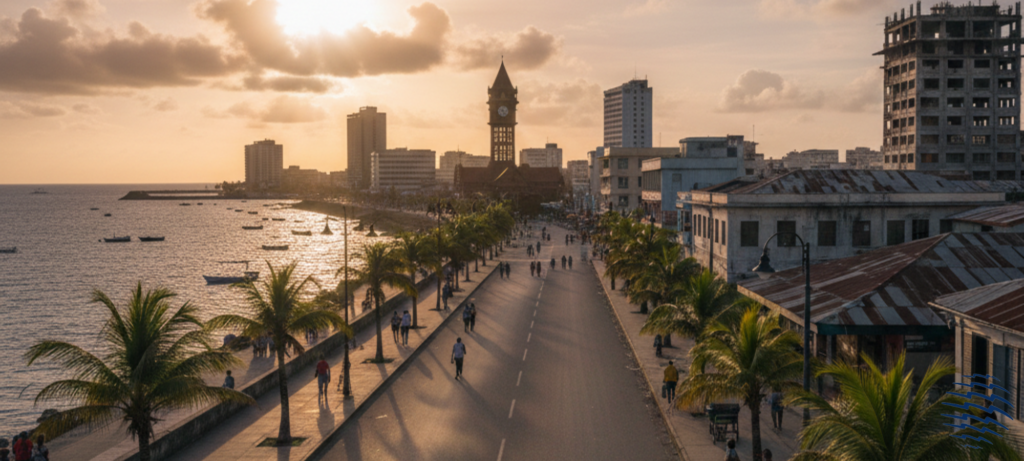
When people talk about Guyana, the conversation eventually circles back to one place: Region 4. Officially known as Demerara-Mahaica, it is the heartbeat of the nation. Whether you are landing at the newly expanded Cheddi Jagan International Airport or navigating the bustling grid of Georgetown, you are feeling the pulse of a region that refuses to sit still.
In 2026, Region 4 is more than just an administrative boundary; it is the epicenter of Guyana’s “Golden Era.” As the country undergoes an unprecedented economic transformation, Demerara-Mahaica is where the old colonial charm meets the high-octane energy of a modern petrostate.
1. What Exactly is Guyana Region 4?
Region 4 is the smallest of Guyana’s ten regions by land area ($2,232$ $km^2$), but it is by far the most significant. It sits squarely on the northern Atlantic coast, acting as the nation’s control tower.
- The Hub: It houses Georgetown, the capital city and main port.
- The Crowd: According to the latest 2026 demographic estimates, the population has surged past 347,000, accounting for nearly 40% of the entire country’s population.
- The Border: It is flanked by the Demerara River to the west and the Mahaica River to the east, creating a corridor of intense economic activity.
For a formal breakdown of the region’s geographical boundaries and land use, the Guyana Lands and Surveys Commission provides the most detailed technical mapping.
2. Why Region 4 is the Center of Gravity
There’s a reason why almost every major decision in Guyana happens within this thin strip of coastline. Demerara-Mahaica is the seat of the Parliament of Guyana, the residence of the President, and the headquarters for every major ministry and foreign embassy.
The 2026 Infrastructure Boom
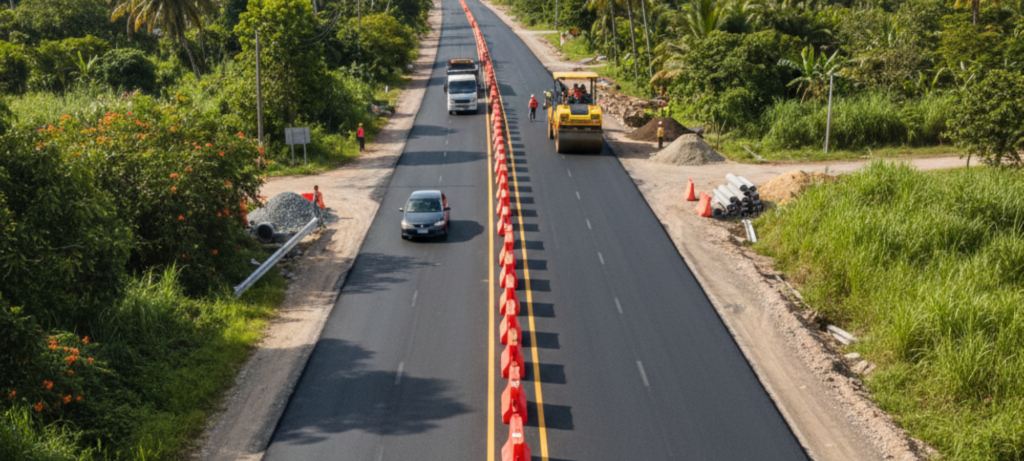
If you visit Region 4 today, you will see a landscape in flux. The government’s accelerated modernization program is most visible here:
- The New Demerara Harbour Bridge: A massive four-lane, high-span structure is finally replacing the old retractable crossing, aiming to end the legendary traffic jams that once defined East Bank life.
- Highway Expansions: The Ogle to Eccles highway is now a vital artery, connecting the East Coast and East Bank and opening up thousands of new acres for residential and commercial development.
- Silica City: Just on the outskirts of the region, the “Silica City” project is the nation’s answer to rising sea levels—a futuristic urban center built on higher ground.
This rapid growth has made Region 4 the most competitive real estate market in the Caribbean. If you’re tracking these developments, our deep dive into Guyana Houses for Sale offers a realistic look at current price points and high-demand neighborhoods.
3. Landmarks: The Soul of the Region
You haven’t truly experienced Region 4 until you’ve stood at its landmarks. These aren’t just tourist stops; they are the social fabric of the community.
Stabroek Market
The iconic cast-iron clock tower of Stabroek Market is the undisputed king of Georgetown. It’s loud, it’s chaotic, and it’s where you can find anything from fresh passionfruit to gold jewelry. It’s the rawest expression of Guyanese commerce.
The Sea Wall
The Sea Wall is more than a defense against the Atlantic; it’s the city’s living room. On any given evening, you’ll find joggers, families eating ice cream, and groups of friends limeing against the breeze.
St. George’s Cathedral
As one of the world’s tallest wooden buildings, St. George’s stands as a testament to Guyanese craftsmanship. Even in 2026, surrounded by new glass-and-steel office buildings, its Gothic architecture remains a grounding force in the city center.
4. Communities and Local Life
Region 4 isn’t just Georgetown. It is a string of vibrant, historically rich villages that stretch along the coast:
- Timehri: The gateway for international travelers.
- Buxton: A village with a deep sense of history and cultural pride.
- Enmore: Historically tied to the sugar industry, now seeing a revival through new agro-processing ventures.
- Lusignan and Unity: Coastal communities that blend traditional agriculture with new suburban growth.
This mix of urban density and village life is what makes the region feel “layered.” You can be in a high-level board meeting in a Georgetown skyscraper at noon and be sitting under a mango tree in a quiet village by 2:00 PM.
5. Economy and Opportunity
In 2026, the economic outlook for Region 4 is staggering. With the Gas-to-Energy project expected to significantly lower electricity costs by the end of the year, manufacturing and light industry are flocking to the region’s industrial zones.
- The Oil Effect: While the oil is offshore, the “brains” of the operation—the logistics, the law firms, and the supply chains—are all based in Region 4.
- Small Business Growth: The surge in population has created a “multiplier effect” for local shops, cafes, and services. If you’re a budding entrepreneur looking to tap into this market, our guide on How to Start a Small Business with Low Budget is an excellent starting point.
6. Realities of Daily Life: Focus and Resilience
Living in the busiest region of a country undergoing a massive boom requires a certain mindset. The noise of construction, the heat of the coastal sun, and the fast-moving crowds can be overwhelming.
Navigating life here—whether you’re a local professional or a digital nomad—requires the ability to stay grounded. Interestingly, the strategies we discussed in Ways to Maintain Focus During Long Tasks apply perfectly to the “hustle” of Region 4. It’s about managing your energy in an environment that never stops moving.
7. Travel and Safety in 2026
Region 4 is generally safe for tourists, but like any capital region, it requires “city smarts.”
- Visibility: Foreigners are often very visible in downtown Georgetown. It’s wise to avoid wearing expensive jewelry or carrying large amounts of cash.
- Nightlife: Stick to well-lit areas and use reputable taxi services (or ride-sharing apps, which have become the norm in 2026).
- Natural Beauty: Many use Region 4 as a base before flying into the interior to see the incredible biodiversity. If you’re a nature lover, don’t miss our Birds of Guyana 2026 for tips on what to see before you head into the bush.
People Also Ask (FAQ)
What is the capital of Region 4?
The capital of Region 4 (Demerara-Mahaica) is Georgetown, which is also the national capital of Guyana.
Is Region 4 the most populated area?
Yes, it is the most densely populated region, holding nearly $40\%$ of the nation’s residents.
What are the main rivers in Region 4?
The region is defined by the Demerara River on its western side and the Mahaica River on its eastern side.
Is Georgetown safe at night?
While many parts of Georgetown are vibrant at night, visitors are advised to avoid walking alone in dark areas and to stay in groups in well-populated entertainment districts.
Final Thought: The Honest Face of Guyana
Guyana Region 4 is not a postcard; it is a living, breathing reality. It’s where you see the country’s history in its wooden shutters and its future in its rising cranes. It’s a place that forces you to be present, to be resilient, and to be curious.
Whether you’re here for business, family, or the sheer adventure of the world’s newest petrostate, Demerara-Mahaica is where the story of modern Guyana is being written—one block at a time.