
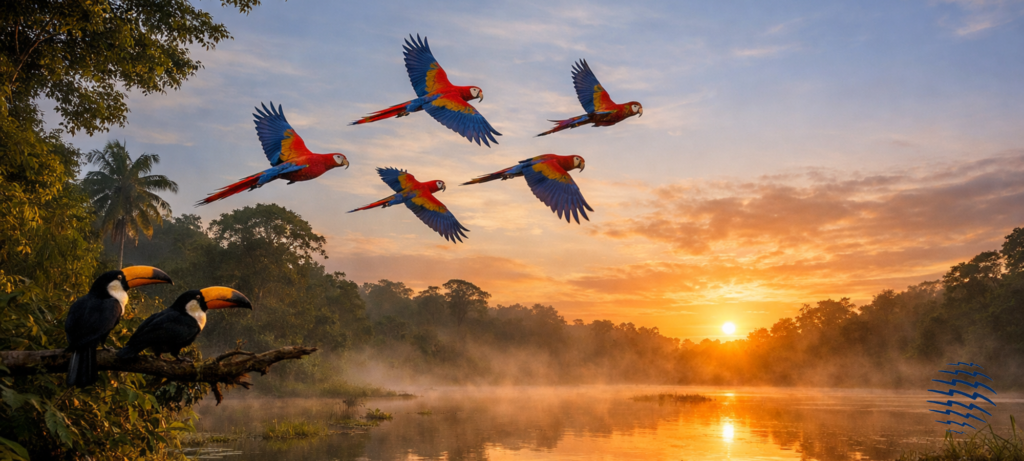
If you’ve ever stood on the edge of the North Rupununi at dawn, you know that the sound of Guyana isn’t silence it’s a deafening, multi-layered orchestra. It starts with the low, rhythmic “yodel” of the Toucans and builds into the screeching flight of Macaws heading to their feeding grounds.
In the birding world, Guyana is often called the “Land of the Giants.” It is one of the few places left on Earth where you can see the world’s most powerful eagle, a prehistoric “stinkbird” with claws on its wings, and a bright orange bird that looks like it was painted by a surrealist artist all within the same week.
1. The National Icon: The Hoatzin (Canje Pheasant)
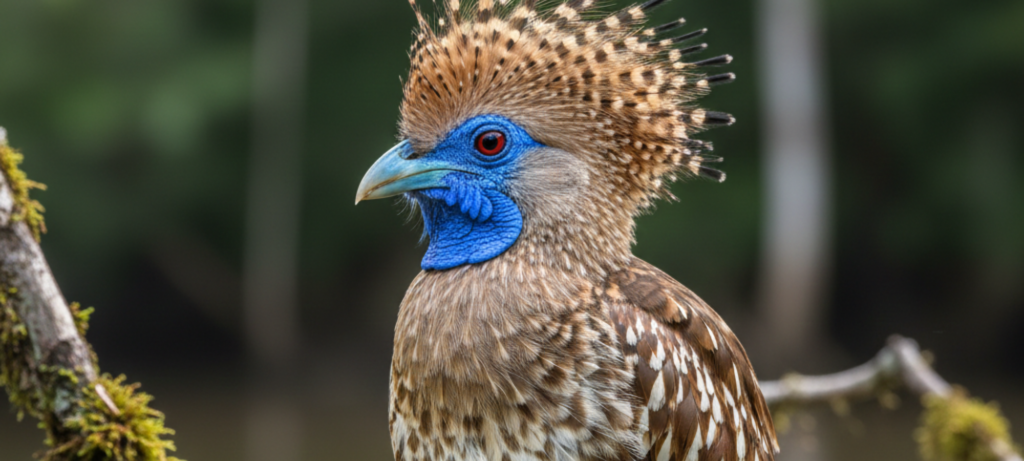
You cannot talk about the birds of Guyana without starting with the Hoatzin (Opisthocomus hoazin). Locally known as the Canje Pheasant, this bird is a living enigma.
- The “Dinosaur” Connection: Hoatzin chicks are born with two claws on each wing, which they use to climb trees and scramble through mangroves. It is a trait that disappears as they reach adulthood, but it serves as a literal link to their ancient ancestors.
- The Cow-Bird: Unique among all birds, the Hoatzin has a digestive system that ferments leaves like a cow’s stomach. This leads to a distinctively musky odor, earning them the unrefined nickname “Stinkbird.”
- Where to see them: They are surprisingly accessible. You can spot them in the Berbice River area or even along the botanical gardens in Georgetown.
Watching a group of Hoatzins clumsily move through the branches is a reminder that nature doesn’t always value grace—sometimes, it values being weird enough to survive for 64 million years.
2. The Power Players: Raptors of the Virgin Forest
Guyana is perhaps the best place on the planet to see the “Big Three” of the raptor world. Because our rainforest remains 80% intact, these apex predators have the massive territories they need to thrive.
The Harpy Eagle
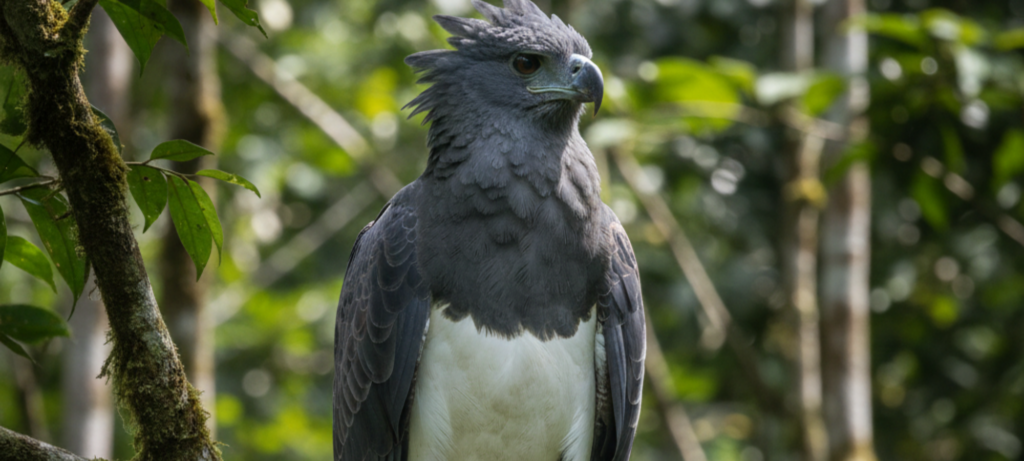
The Harpy Eagle is the heavyweight champion of the sky. With talons the size of a Grizzly Bear’s claws, they hunt monkeys and sloths right out of the canopy. Seeing a Harpy in the wild is a “bucket list” moment for every serious birder. In 2026, conservation efforts around Warapoka and the Iwokrama Forest have made sightings more consistent than ever.
The Crested Eagle
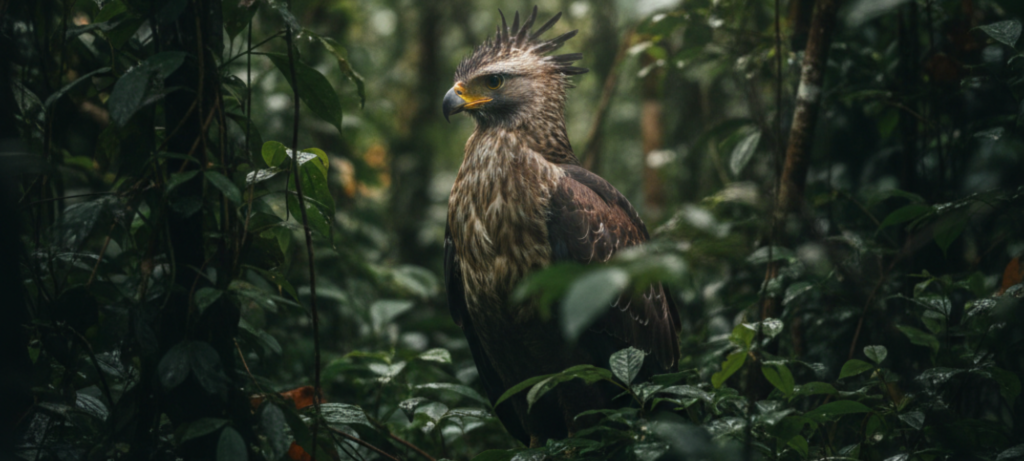
Often overshadowed by its Harpy cousin, the Crested Eagle is equally magnificent but even more elusive. It prefers the deep, undisturbed primary forest, where its cryptic plumage makes it nearly invisible until it moves.
3. The “Specialties”: Guianan Shield Endemics
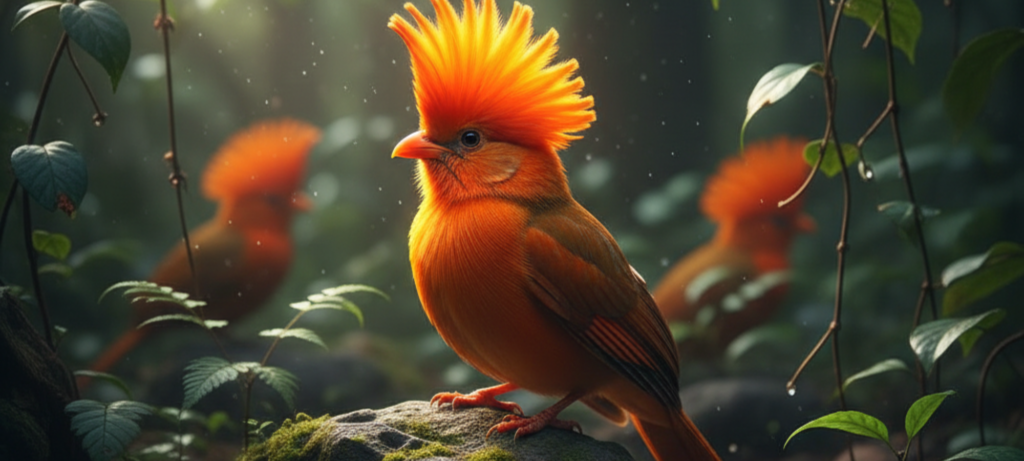
What makes birds in Guyana so scientifically significant is the Guianan Shield. This ancient geological formation creates a “lost world” environment where species evolved in isolation.
| Species | Unique Trait | Best Location |
| Guianan Cock-of-the-Rock | Neon orange plumage and a fan-shaped crest. | Kaieteur Falls / Iwokrama |
| Sun Parakeet | Bright yellow and orange; critically endangered. | Karasabai Village |
| Red Siskin | A tiny, fiery red finch once thought extinct in the region. | South Rupununi |
| Blood-colored Woodpecker | Found only in a thin strip of the coastal Guianas. | Georgetown Botanical Gardens |
The Guianan Cock-of-the-Rock is a fan favorite. Visiting a “lek” (a display ground where males dance to impress females) is a sensory overload of orange feathers and strange, squawking calls.
4. Habitat Diversity: From Mangroves to Savannahs
The reason you can see over 800 species of birds in Guyana is the sheer variety of “rooms” the country offers.
The Coastal Belt
Even if you never leave the city, the birds in Guyana will find you. The Georgetown Botanical Gardens host over 200 species, including the Snail Kite and the Great Kiskadee. It’s the perfect “warm-up” for a birding trip.
The Rainforest (Iwokrama & Surama)
This is the heart of the country. Using the Iwokrama Canopy Walkway, you can stand 30 meters above the ground, looking eye-to-eye with Cotingas, Puffbirds, and Aracaris.
The Rupununi Savannahs
When you move south, the trees disappear and the world opens up into golden grasslands and marshy wetlands. This is where you find the Jabiru Stork—the tallest flying bird in South America—nesting in massive silk cotton trees.
5. Birding as a Pillar of Conservation
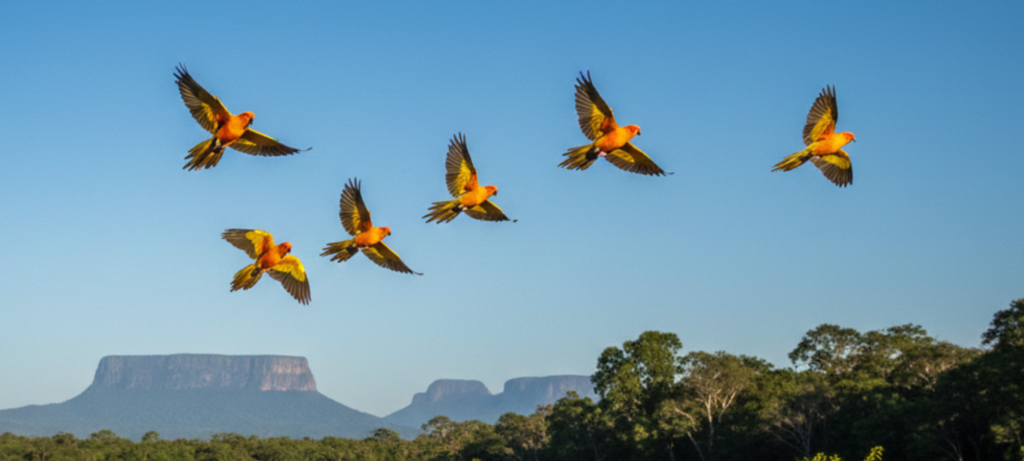
In 2026, birdwatching isn’t just a hobby in Guyana; it’s a vital part of our economy. Indigenous communities, like those in Surama and Karasabai, have shifted from hunting to “bird guiding.”
This transition has saved species like the Sun Parakeet from the illegal pet trade. When a community realizes that a live bird in a tree is worth more in tourism dollars than a trapped bird in a cage, the entire ecosystem wins.
This model of community-led conservation is much like starting a sustainable venture. If you’re interested in how these local economies are built, our guide on How to Start a Small Business with Low Budget touches on the resourcefulness required to turn natural assets into long-term growth.
6. The “Mental Game” of Birdwatching
Serious birding is a test of patience. You might spend four hours sitting silently in a humid thicket just to see the “ghostly” Rufous-winged Ground-Cuckoo. It requires an intense level of concentration that most people in the digital age have lost.
Sustaining that kind of attention in the heat of the jungle is a skill. We’ve found that the techniques used by professional trackers are very similar to those we outlined in Ways to Maintain Focus During Long Tasks. Whether you’re waiting for a Harpy Eagle to return to its nest or working through a complex project, the “patience of the woods” is a universal asset.
7. Planning Your 2026 Trip: Practical Tips
If you are coming to see the birds of Guyana, keep these three things in mind:
- Seasonality: The best time for birding is usually the dry seasons (September–April). During the rains, many savannah roads become impassable.
- Local Guides: Do not try to do this alone. Guyanese guides can identify birds by a single “chip” note from 50 yards away. Their ears are as important as your binoculars.
- Travel Ease: For those coming from North America, the Guyana US Travel Bond Waiver has made it significantly easier to plan quick, hassle-free birding expeditions without the stress of extra financial hurdles.
FAQ: Quick Hits for Birders
How many bird species are in Guyana?
As of 2026, over 815 species have been recorded, with new sightings occurring frequently in the remote Kanuku Mountains.
What is the largest bird in Guyana?
The Jabiru Stork is the tallest, but the Harpy Eagle is the most powerful raptor.
Are there “pink birds” in Guyana?
Yes! The Scarlet Ibis and the Roseate Spoonbill can be seen in the coastal mangroves, creating stunning flashes of pink and red against the green mudflats.
Can I see the National Bird in Georgetown?
Yes, the Hoatzin can often be found in the Botanical Gardens, though they are more numerous in the Canje River area.
Final Thought: The Feeling of the Forest
There is a moment in Guyanese birding that happens to everyone. You’re deep in the forest, the humidity is 90%, and suddenly, the “Screaming Piha” lets out its iconic, piercing whistle. It’s the sound of a world that doesn’t need humans to function.
The birds of Guyana are more than just items on a checklist. They are the guardians of the Guianan Shield. Whether you are a professional ornithologist or a casual traveler, seeing these birds in Guyana reminds you that there are still places on this planet where nature is in charge.