

Diamond Guyana is one of those search terms that can lead you down two completely different paths.
Some people are looking for real diamonds — the gemstones that have been pulled from Guyana’s rivers for generations.
Others are asking about Diamond, the growing community on the East Bank Demerara, just outside Georgetown.
Both meanings matter, and honestly, it’s easy to see why the confusion happens. Guyana is a country where natural resources and new development often sit side by side.
So let’s talk about Diamond Guyana properly, in a way that feels clear and actually useful.
Diamond Guyana and the Long Diamond Mining Story
A lot of people don’t realise this, but Guyana has been producing diamonds for more than 130 years.
It’s not on the scale of Botswana or Russia, but it’s real, and it’s been part of interior life for a very long time.
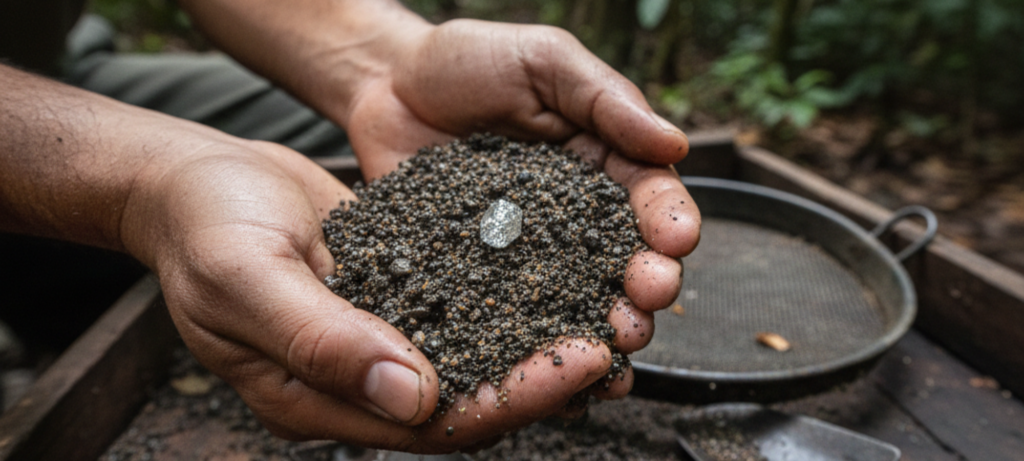
Most diamond mining here has never been about massive open-pit operations. Instead, it has mostly remained small-scale, done by local miners working river deposits.
Where Diamonds Are Found in Guyana
The main diamond areas are deep inland, especially around the Mazaruni River basin.
Diamonds here are usually recovered through alluvial mining, meaning the stones are found in river gravels and sediments, not dug out from deep underground tunnels.
That detail matters because it shapes the entire industry. Mining is often seasonal, physical, and tied closely to the rhythms of the interior.
People travelling into these regions often combine the experience with other interior journeys, like tours to Kaieteur Falls Guyana, because the landscapes overlap in the same rainforest heartland.
Diamond Mining and Production in Guyana
Guyana’s diamond production has fluctuated over the years, sometimes sharply.
Production Levels Over Time
Back in 2004, Guyana recorded a peak of over 445,000 carats.
In more recent years, annual production has averaged closer to around 68,000 carats.
That number rises and falls partly because miners often shift between gold and diamonds depending on global prices. When gold is high, some diamond work slows down. When gold drops, diamonds become more attractive again.
So the industry moves, almost like a tide.
The Mystery of Geological Origins
One of the more interesting parts of Guyana’s diamond story is that no major kimberlite pipes have been confirmed.
Instead, many researchers believe Guyanese diamonds may come from ancient sedimentary rocks linked to the Roraima Supergroup.
In simpler terms, the stones have travelled over time, ending up in river systems rather than being traced back to a single volcanic source.
For gem-focused background, the Gemological Institute of America has published detailed observations about Guyana’s diamonds and their unusual qualities.
What Makes Guyana Diamonds Different
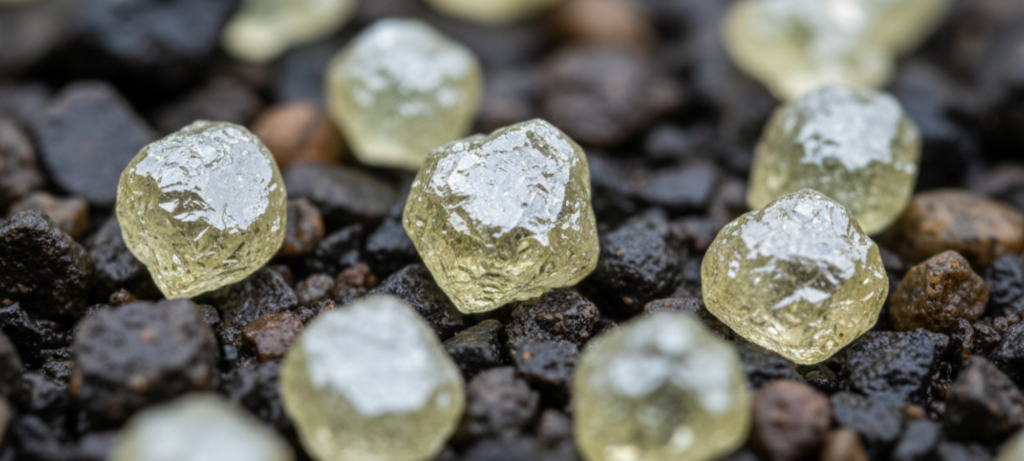
Even though Guyana is not one of the world’s largest producers, the diamonds it yields are often known for quality.
Many Guyanese stones are recognised for:
High clarity
Strong brilliance
Rare colour tones
Some diamonds show light yellow, warm brown, or even faint greenish hues. A few have subtle natural effects caused by environmental exposure over time.
Because of this, Guyana’s diamonds often find their way into international trading centres such as Belgium, Israel, and the UAE.
So the country’s output may be modest, but the stones themselves can be genuinely sought after.
Regulation and Oversight in Diamond Guyana
Mining is not unregulated. Guyana has a structured system in place.
The Role of the GGMC
The Guyana Geology and Mines Commission (GGMC) is the main government body responsible for regulating mining activity, issuing licences, and monitoring declarations.
Diamond declarations are subject to:
A 3% royalty
A 2% withholding tax
This is part of the framework designed to keep the industry accountable while still supporting small miners.
Miners’ Representation
Another key organisation is the Guyana Gold and Diamond Miners Association (GGDMA), which advocates for miners and provides industry support.
Because so much of Guyana’s mining remains artisanal and small-scale, representation like this plays a major role.
Diamond Guyana Is Also a Real Place Near Georgetown
Now here’s where many people get tripped up.
Diamond is not only about gemstones.
Diamond, East Bank Demerara is a rapidly developing community close to Georgetown.
Diamond on the East Bank Demerara
Located in Region 4, Diamond has become one of the most active growth areas outside the capital.
Over the past decade, the area has expanded with:
New housing schemes
Banks and commercial centres
Major highway upgrades
Sporting facilities
A new regional hospital
It’s one of those places that shows how quickly Guyana is changing.
If you’re trying to understand where Diamond fits into the wider coastal region, it connects closely with Georgetown’s administrative and economic zone.
Diamond District Developments
Alongside the established community, newer upscale residential projects have also emerged, sometimes marketed under names like Diamond District Guyana.
This is part of a broader shift happening across the East Bank, where infrastructure is drawing more people outward from Georgetown.
Living in Diamond Guyana Today
People searching for Diamond Guyana are often looking for practical answers:
Is it a good place to live?
Is it close to the city?
Is it developing fast?
And the honest answer is yes — Diamond has become one of the most important commuter and residential hubs near Georgetown.
It’s not a quiet village anymore. It’s turning into a modern corridor of growth.
Diamond Mining vs Diamond Community: Two Different Meanings
This is the simplest way to keep it straight:
Diamonds (gemstones) are mined inland, mainly in river basins like Mazaruni.
Diamond (the community) is a growing area on the East Bank near Georgetown.
Same word, two completely different contexts.
So when someone says Diamond Guyana, it always helps to ask what they actually mean.
Key Points
Guyana has mined diamonds for more than 130 years
Mining is mostly alluvial, small-scale, and artisanal
Production peaked in 2004 but now averages around 68,000 carats annually
Diamonds are valued for clarity and rare natural colour hues
The stones may originate from ancient Roraima Supergroup sediments
The GGMC regulates the industry with royalties and taxes
Diamond is also a major developing community near Georgetown in Region 4
Infrastructure growth has made Diamond an important residential hub
People Also Ask
Are there diamonds in Guyana?
Yes, Guyana has produced diamonds for over a century, mainly through river-based mining.
Which region is Diamond located in Guyana?
Diamond (the community) is located in Region 4, Demerara-Mahaica, close to Georgetown.
What colours do Guyana diamonds come in?
Many are bright white, but some show yellow, brown, or greenish tones.
Is Diamond Guyana only about mining?
No, Diamond is also the name of a fast-growing residential and commercial area on the East Bank.
FAQs
Can visitors tour diamond mining areas?
Most mining locations are remote and not designed for tourism. Interior travel is usually done through organised nature trips instead.
Who controls diamond mining in Guyana?
The Guyana Geology and Mines Commission (GGMC) oversees licensing and declarations.
Why is Diamond East Bank developing so quickly?
Its proximity to Georgetown and major infrastructure projects have made it one of the country’s key expansion zones.
For official documentation and services connected to identity and citizenship, many people also look into processes like the Guyana Birth Certificate, especially for diaspora families handling legal paperwork.
Final Thought
Diamond Guyana is really two stories happening at once.
One is old, stretching back more than a century into the rivers and forests where miners still search gravels for stones that end up across the world.
The other is new — a growing community near Georgetown, full of roads, housing schemes, and the kind of development that signals a changing country.
And maybe that’s what makes Guyana feel so interesting. It holds both worlds at the same time, without always announcing it.