
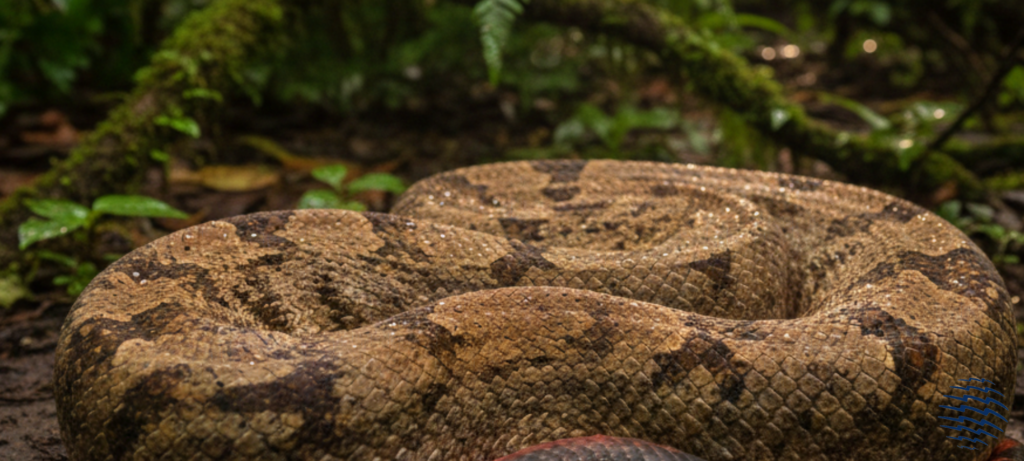
The Guyana Red Tail Boa (Boa constrictor constrictor) is one of those animals that stays in your mind long after you’ve seen one in person. Photos on a screen rarely do them justice. In the flesh, that signature red tail looks deeper, almost as if the crimson hue has been soaked into the scales over centuries rather than just sitting on the surface. For those of us in Guyana, seeing a “Land Boa” (as they are sometimes called locally) is a reminder of the raw, untouched beauty of our rainforests.
In 2026, as interest in Guyana’s biodiversity peaks alongside our economic boom, the Guyana Red Tail Boa has become a symbol of our natural heritage. But anyone who has spent time around different boa localities knows that the Guyana form has its own presence a specific kind of calm, muscular strength that sets it apart from its cousins in Suriname or Colombia.
1. Where the Guyana Red Tail Boa Comes From
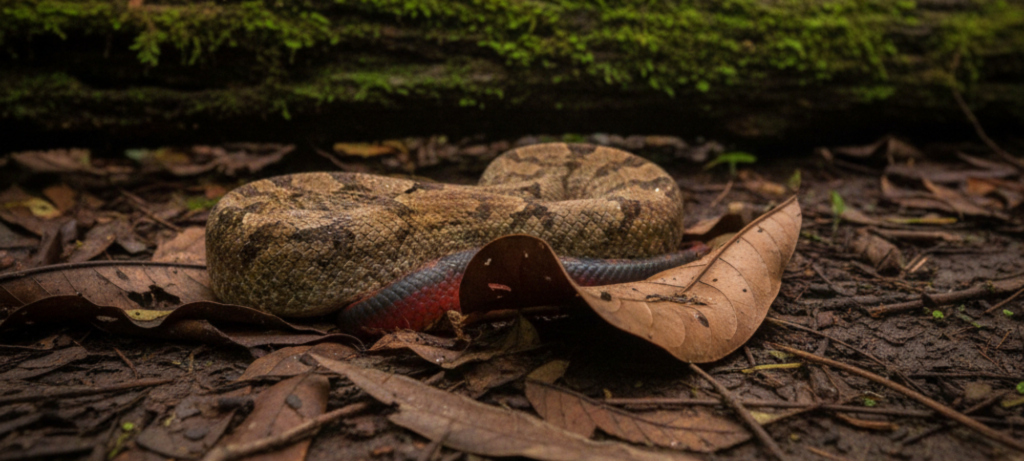
These snakes are native to the dense rainforests and humid lowlands of northern South America, with Guyana being the heart of their range. In the wild, they are masters of their environment, moving seamlessly through leaf litter, fallen branches, and forest edges.
They are technically “semi-arboreal.” While they are heavy-bodied as adults, younger boas love to climb. This versatility is part of their survival strategy. They don’t chase prey; they wait with a level of patience that is almost meditative.
For a deeper scientific look at how these giants are classified, Wikipedia’s overview of the Boa Constrictor provides excellent historical context.
2. What Makes the Guyana Locality Visually Unique?
To the untrained eye, a boa is a boa. But to a “locality purist,” the Guyana Red Tail is a masterpiece.
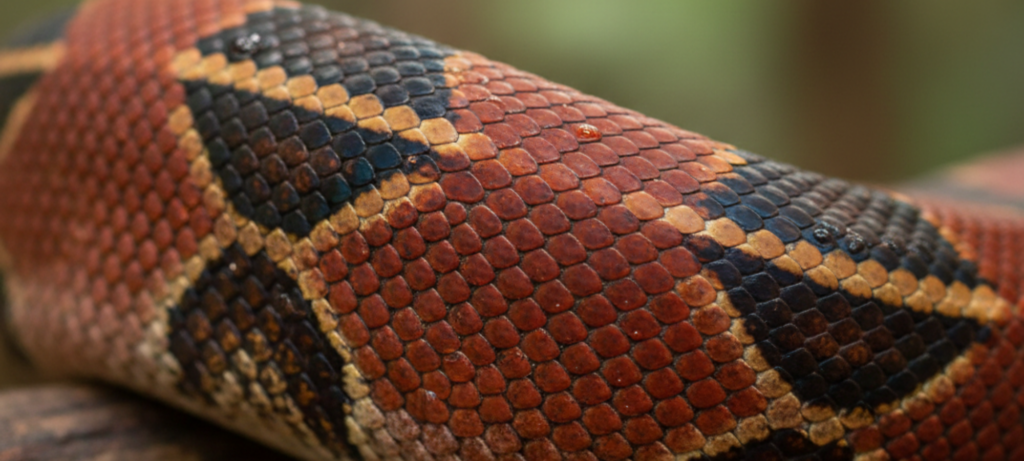
- The Contrast: They often have sharply defined, “peaked” saddles along their back. The body pattern is cleaner, with less “pixelation” or “muddy” colors than the more common Colombian varieties.
- The Tail: This is the signature. In Guyana specimens, the red is vivid—often described as “glowing embers.”
- Ladder Tailing: You’ll often see markings that look like the rungs of a ladder near the tail, which is a highly prized aesthetic trait among collectors.
3. Size, Growth, and the Reality of Space
One of the biggest mistakes new keepers make is underestimating the growth of a True Red Tail.
- Females: Can reach a powerful 8 to 10 feet. They are thick, heavy, and require a massive enclosure (at least 6 to 8 feet long).
- Males: Usually stay more manageable, between 4 to 6 feet.
If you are planning to keep one of these giants, you need to think about your home’s layout. Just like the Guyana houses for sale we discussed recently, real estate for a boa is all about “location and space.” You cannot keep a 10-foot snake in a cramped tank; they need room to stretch, thermoregulate, and thrive.
4. Habitat Needs: Recreating the Amazon in 2026
Keeping a boa is an exercise in environmental engineering. You aren’t just keeping a snake; you are maintaining a micro-climate.
Temperature and Humidity
In the Guyanese jungle, the humidity rarely drops below 70%. In captivity, failing to maintain this leads to respiratory infections and “bad sheds.”
- Basking Spot: 88-90°F.
- Cool Side: 78-80°F.
- Humidity: Consistent 60-70% (higher during shedding).
Setting up a large enclosure is a long-term project. It requires focus and attention to detail. Much like our guide on Ways to Maintain Focus During Long Tasks, reptile husbandry is about the “long game”—staying as attentive in Year 10 as you were on Day 1.
5. Lifespan: A 30-Year Commitment
This is the part that makes people pause. A healthy Guyana Red Tail Boa can live 25 to 30 years.
When you buy a baby boa, you aren’t just getting a pet; you are getting a companion that might be with you longer than your car or your current job. It is a serious commitment. For those looking for a detailed husbandry schedule, the Reptilian Arts Care Sheet is a fantastic professional resource.
6. Temperament: The Gentle Giant
Despite their size, Guyana boas are famous for being “chilled.” Once they are out of the “nippy” baby stage, they tend to be slow-moving and curious. However, they have a very strong “feeding response.”
Pro Tip: Use “Hook Training.” By gently touching the snake with a reptile hook before picking it up, you signal that it is “handling time,” not “feeding time.” This simple step prevents accidental bites.
7. Feeding and Diet: Avoid the “Power-Feeding” Trap
Boas have incredibly slow metabolisms compared to pythons. A common mistake is feeding them too often.
- Babies: Every 10–14 days.
- Adults: Every 3–4 weeks.
An obese boa will have a “sausage-like” appearance and a shorter lifespan. A healthy Guyana boa should look like a “loaf of bread” in cross-section—muscular and sturdy.
8. Sourcing Your Boa: Why Captive-Bred Matters
In 2026, the global reptile community is moving toward locality-pure, captive-bred animals. Taking snakes from the wild in Guyana is not only bad for the ecosystem but often leads to snakes with parasites and high stress levels.
If you are a breeder looking to start a small-scale venture in the reptile world, remember that quality always beats quantity. Building a reputation for healthy, locality-pure animals is like starting any other business; it takes time. You might find our guide on How to Start a Small Business with Low Budget useful for thinking about the logistics of a home-based breeding project.
9. Guyana vs. Suriname vs. Colombia
For many, the debate is between a Guyana and a Suriname boa.
- Guyana/Suriname: Both are “True” Red Tails (B.c.c.). They grow larger and have more intense tail colors.
- Colombia: Usually a different subspecies (Boa imperator). They stay smaller and have “smudged” tail colors.
If you are traveling between the US and Guyana to check on your investments or visit family, remember that travel policies have changed. Our recent update on the Guyana US Travel Bond Waiver confirms that you don’t need to worry about the rumored $15,000 bond, making it easier for herpetologists and families alike to move between these regions.
People Also Ask (FAQ)
Are Guyana Red Tail Boas venomous? No. They are non-venomous constrictors. They use their powerful muscles to submerge prey, not venom.
How big of a tank does an adult Guyana boa need? For a large female, a 6ft x 2ft x 2ft enclosure is the absolute minimum, though 8ft is preferred.
Can they live together? No. Boas are solitary animals. Housing them together causes immense stress and can lead to cannibalism or injury.
Why is my boa’s tail not red? If it’s a “true” Guyana locality, the color should develop with age. However, “common” boas (B.i.) are often sold as red tails but never develop that deep crimson hue.
Final Thought: The Feeling of the Quiet Giant
The Guyana Red Tail Boa doesn’t perform tricks. It doesn’t bark for food. It just exists with an ancient, quiet confidence. When you watch one move slowly through its enclosure, tongue tasting the air, you realize that the appeal isn’t just the color—it’s the connection to something wild and prehistoric.
Keeping a boa forces you to slow down. It teaches you that some of the best things in life—whether it’s building a house, starting a business, or raising a snake—take decades, not days. And in our fast-moving 2026 world, maybe that’s exactly what we need.