
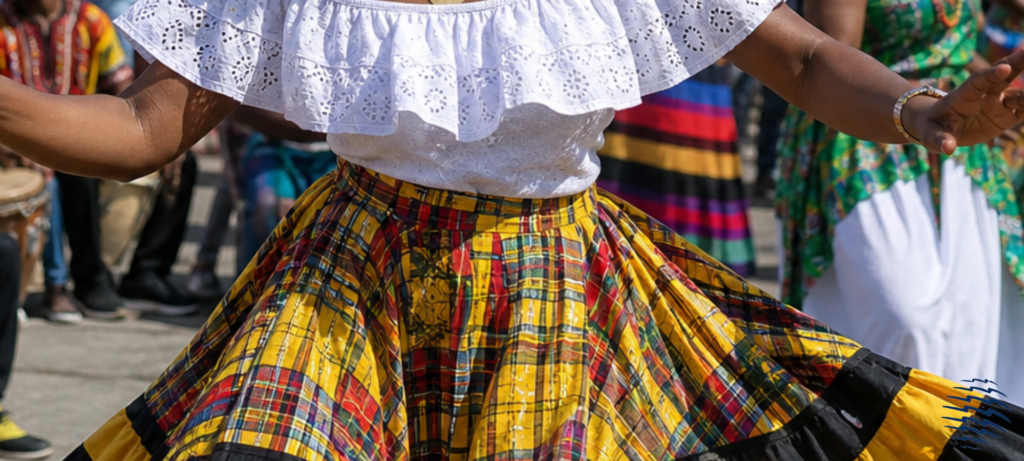
Let me paint you a picture. It is early morning on August 1 in Georgetown, Guyana. Families are already out in their finest African wax fabrics. Somewhere nearby, a drummer has started playing. The smell of cook-up rice is drifting from almost every yard. This is not just a public holiday. This is Emancipation Day in Guyana — and if you have never experienced it, you are missing something genuinely special.
So what exactly is it? Why does it matter so much? And what actually happens on the day? Whether you are Guyanese living abroad, a history lover, or someone thinking of visiting Guyana in August, this guide has everything you need to know.
Table of Contents
- 1. What Is Emancipation Day in Guyana?
- 2. When Is Emancipation Day in Guyana 2026?
- 3. The History Behind the Holiday
- 4. Cuffy: Guyana’s National Hero of Freedom
- 5. What Is the Meaning of Emancipation Day in Guyana?
- 6. Emancipation Day Activities in Guyana
- 7. Georgetown vs Berbice: Two Very Different Celebrations
- 8. Traditional Food You Will Find on the Day
- 9. Guyana vs Other Caribbean Nations — Quick Comparison
- 10. How the Diaspora Marks the Day
- 11. Frequently Asked Questions (FAQs)
- 12. Final Thoughts
1. What Is Emancipation Day in Guyana?
Emancipation Day in Guyana is a national public holiday held on August 1 every single year. It marks the day the British Empire officially abolished slavery — something that took effect on August 1, 1834, through the Slavery Abolition Act of 1833. For Guyana, which was called British Guiana at the time, it was the start of a completely new chapter.
The holiday used to go by the name Freedom Day. Today, the whole English-speaking Caribbean calls it Emancipation Day. Guyana made it an official public holiday in 1994, and it has been growing in scale and significance ever since.
Here is something most people do not realise though. The 1834 law did not actually grant full freedom straight away. Formerly enslaved people aged over six were relabelled as ‘apprentices’ and still forced to work — without pay — for several more years. True emancipation only came on August 1, 1838. That four-year delay is part of why this date carries such emotional weight for so many Guyanese families.
2. When Is Emancipation Day in Guyana 2026?
In 2026, Emancipation Day in Guyana falls on Saturday, August 1. Because it lands on a weekend this year, government offices, schools, and banks will all be closed. Some private shops might open on reduced hours. But honestly, most people will be at the National Park or with their families — not worrying about business hours.
If you are planning to travel to Guyana for the celebrations, book early. Georgetown hotels fill up fast around this time. And if you want to catch the Hopetown Soirée in Berbice, you will want to be there the night before — July 31 — when the real festivities kick off.
3. The History Behind the Holiday
You cannot fully appreciate Emancipation Day without understanding what came before it. And honestly, what came before it was horrific.
Slavery arrived in Guyana in the 17th century. The Dutch West India Company started shipping enslaved Africans across the Atlantic to work on sugar plantations. These were not just difficult conditions — they were designed to strip people of everything: their names, their languages, their families, their dignity.
But the people they enslaved did not simply accept it. In 1763, a coordinated uprising in Berbice shook the entire colonial system. Cuffy — more on him in the next section — led thousands of enslaved people in what became one of the most significant rebellions in Caribbean history. Then in 1823, another massive uprising broke out in Demerara, involving roughly 13,000 enslaved people.
Neither rebellion succeeded militarily. But both sent a message — and helped push the abolition movement forward in Britain.
When the Slavery Abolition Act of 1833 finally passed, it came with a deeply ugly compromise. Plantation owners across the empire were paid £20 million in compensation. John Gladstone — whose son went on to become British Prime Minister — personally received over £100,000 for the more than 2,000 enslaved people he ‘owned’ in Guyana and Jamaica. The people who were actually enslaved got nothing. No land. No money. Not even a formal apology.
When 1838 finally arrived and full freedom came, thousands of formerly enslaved Africans left the plantations immediately. They pooled their savings, bought land together, and built entire villages from the ground up — without any government help. Those villages are still part of Guyana today, and they are celebrated on Emancipation Day as proof of what people can build when they are finally free.
4. Cuffy: Guyana’s National Hero of Freedom
If there is one name you need to know when talking about Emancipation Day in Guyana, it is Cuffy — also spelled Kofi or Coffij, depending on the source. He led the 1763 Berbice Slave Rebellion and is officially recognised as Guyana’s first national hero. His monument stands at the Square of the Revolution in Georgetown, and you will see it referenced throughout Emancipation Day events.
What made Cuffy remarkable was not just his courage. It was his strategic thinking. He actually attempted to negotiate a peace deal with Dutch colonial authorities — proposing that the territory be split between the enslaved population and the colonisers. That kind of political reasoning, in the middle of an armed rebellion in 1763, is extraordinary.
The negotiations eventually broke down. The rebellion was crushed. But Cuffy’s name did not die with it — and every August 1, Guyanese people make sure it never will.
5. What Is the Meaning of Emancipation Day in Guyana?
On the surface, the meaning of Emancipation Day in Guyana is straightforward — it marks the abolition of slavery. But spend five minutes talking to a Guyanese person about it and you will quickly realise it goes much deeper than that.
For Afro-Guyanese communities, it is about honouring ancestors who survived something that was designed to destroy them — and who somehow still managed to preserve their culture, their music, their food, and their sense of identity through it all.
For Guyana as a whole, it is a reminder of where the country came from. Guyana is home to African, Indian, Amerindian, Chinese, Portuguese, and European communities. The national motto is ‘One People, One Nation, One Destiny.’ Emancipation Day is one of the moments when that motto actually feels real — when people from all backgrounds come together to mark a turning point in their shared history.
It is also a day for honest reflection. As former Minister Norma Whittaker once put it in the Guyana Chronicle: how free are we, really? That question — uncomfortable as it is — is part of what keeps Emancipation Day meaningful rather than just ceremonial.
If you want to understand more about the cultural traditions tied to this day, have a look at our guide on Guyana Clothing Traditional Dress, Everyday Style, and What People Really Wear — the African-inspired outfits worn on Emancipation Day are a whole story in themselves.
6. Emancipation Day Activities in Guyana
Emancipation Day activities in Guyana start the night before and keep going well into August 1. Here is what you can expect:
Midnight Vigil — July 31
The night before Emancipation Day, community groups, churches, and cultural organisations hold candlelight vigils. At midnight, church bells ring. Drums start playing in public spaces. It is quiet and powerful — a moment where the historical weight of August 1 really sinks in.
National Park Festival, Georgetown
The big event. The African Cultural Development Association (ACDA) organises a full-day festival at Georgetown’s National Park that attracts thousands of people. You get live music, traditional dance performances, craft stalls, artwork, folk games, and every kind of food you can think of. In recent years, performers from Sierra Leone, Suriname, and other parts of the diaspora have joined local acts — it genuinely feels like a pan-African celebration, not just a local holiday.
Hopetown Soirée, Berbice
This one is harder to reach but worth every bit of effort. Hopetown village on the West Coast of Berbice holds its Soirée on the night of July 31. Drumming, storytelling, dancing, and libations — all under the open sky. Families travel from across Guyana and from overseas specifically for this event. It has a warmth and intimacy that no city festival can match.
Cultural Exhibits and Programmes
Throughout late July and into August, schools, community centres, and the Botanical Gardens host educational exhibits on the history of slavery, displays of traditional African clothing and artefacts, and events aimed at younger generations who are still learning where their culture comes from.
Government Ceremonies
Official speeches and commemorations happen at various government-linked venues, including the Cuffy monument. These are broadcast on radio and TV for those who cannot attend in person.
7. Georgetown vs Berbice: Two Very Different Celebrations
Emancipation Day celebration in Guyana feels quite different depending on where you are.
Georgetown gives you scale. Thousands of people. Big performances. Official ceremonies. The full festival atmosphere at the National Park. If you want to understand the breadth of what this day means to the country, Georgetown is where you see it.
Berbice — specifically Hopetown — gives you something different. Community. History. The kind of celebration where the people organising it are the direct descendants of the formerly enslaved Africans who built that village after 1838. It is smaller, but in some ways it hits harder.
If you can, do both. Arrive a day early, catch the Hopetown Soirée on July 31, then make your way to Georgetown for August 1. And if you are planning a wider Guyana trip, our guide on Tours to Kaieteur Falls Guyana (2026): What It’s Really Like to Go is worth reading before you book anything.
8. Traditional Food You Will Find on the Day
Guyanese food is already delicious any day of the year. On Emancipation Day, it takes on extra meaning. The dishes being cooked and shared are direct links to West African culinary traditions that survived slavery and became part of Guyanese everyday life.
- Cook-up rice — A big one-pot dish: rice, black-eyed peas, coconut milk, meat or fish. It is the kind of food that feeds a whole family from one pot. Deeply Guyanese.
- Metemgee — Root vegetables like cassava, eddoe, plantain, and yam cooked in coconut milk. Often served with dumplings. Filling, flavourful, and rooted in African cooking tradition.
- Foo foo — Boiled plantain pounded into balls, served in soup or as a side. A direct cousin of West African fufu.
- Mauby — A drink made from the bark of the mauby tree, slightly bitter, sweetened and spiced. Refreshing and distinctly Caribbean.
- Street food — At the festival grounds, vendors sell grilled chicken and fish, fried plantain, roasted corn, and more throughout the day.
9. Guyana vs Other Caribbean Nations — Quick Comparison
Guyana is not the only country marking August 1. Much of the English-speaking Caribbean celebrates Emancipation Day on the same date. But every nation brings something different to it. Here is a quick side-by-side:
| Feature | Guyana | Jamaica | Barbados |
| Date | August 1 | August 1 | August 1 |
| Slavery Ended | 1834 / 1838 | 1834 / 1838 | 1834 / 1838 |
| Main Venue | National Park, Georgetown | National Arena, Kingston | Heritage Village, Bridgetown |
| Key Traditions | Cook-up rice, drumming, African attire | Vigils, church, concerts | Season of Emancipation, wreath-laying |
| National Hero | Cuffy (Kofi) | Sam Sharpe | Bussa |
| 2026 Falls On | Saturday, Aug 1 | Saturday, Aug 1 | Saturday, Aug 1 |
The thing that makes Guyana’s version stand out is the village heritage angle. Those post-1838 cooperative villages — built by people who had literally nothing when they walked off the plantations — are a uniquely Guyanese story. You feel that history in the celebrations here in a way that is hard to replicate.
10. How the Diaspora Marks the Day
Millions of Guyanese people live outside Guyana — mostly in the United States, Canada, and the United Kingdom. For many of them, Emancipation Day is one of the days they feel their Guyanese identity most strongly.
Diaspora communities in New York, Toronto, and London organise their own events around August 1 — Guyanese food, music, cultural gatherings. Some fly home specifically for the occasion. The Hopetown Soirée, in particular, has seen a big increase in diaspora visitors in recent years as younger generations look to reconnect with their roots.
Social media has made a difference too. Every year around August 1, Guyanese people worldwide share recipes, family photos, historical facts, and personal reflections. It turns a local public holiday into something that genuinely crosses borders.
11. Frequently Asked Questions (FAQs)
| What is Emancipation Day in Guyana? |
| Emancipation Day in Guyana is a national public holiday on August 1. It marks the abolition of slavery in the British Empire in 1834, which freed enslaved Africans in what was then British Guiana. The day honours Afro-Guyanese resilience, culture, and freedom. |
| When is Emancipation Day in Guyana 2026? |
| Emancipation Day 2026 in Guyana falls on Saturday, August 1, 2026. Because it is a weekend, government offices and banks will be closed. Most celebrations will still go ahead in full — the Saturday date just means more people can attend. |
| What are Emancipation Day activities in Guyana? |
| Main activities include the all-day festival at Georgetown’s National Park, the Hopetown Soirée in Berbice on July 31, African drumming and dance performances, traditional food, cultural exhibits, and government ceremonies at monuments like the Cuffy statue. |
| What is the meaning of Emancipation Day in Guyana? |
| It marks the end of slavery in 1834 and honours the African heritage that survived it. But it is also about the cooperative villages built by formerly enslaved people after 1838, the national hero Cuffy, and an ongoing national conversation about freedom and identity. |
| What food is eaten on Emancipation Day in Guyana? |
| The most common foods are cook-up rice, metemgee, foo foo, and mauby drink. These dishes trace their roots to West Africa and have been part of Guyanese food culture for generations. |
| Is Emancipation Day a public holiday in Guyana? |
| Yes. It has been an official public holiday since August 1, 1994. It was originally called Freedom Day. Most of the English-speaking Caribbean marks the same date. |
12. Final Thoughts
Emancipation Day in Guyana is the kind of public holiday that actually means something. It is not just a day off work — it is a day that carries 400 years of history, culture, resistance, and resilience.
The people who survived slavery in Guyana, who led rebellions, who built villages from nothing when freedom finally came — they deserve to be remembered. And on August 1 every year, they are.
Whether you join the crowds at Georgetown’s National Park, sit in on the Hopetown Soirée under the stars, or simply cook a pot of cook-up rice and think about what the day means — Emancipation Day in Guyana is worth your attention.
If you are planning to visit Guyana or want to keep learning about its culture and history, have a browse through the rest of our Guyana content. There is a lot more to explore.